|
|
|
Music for Christ that Rocks! Reviews: Interviews: Articles: Concerts: Send E-mail. Submit
your CD for review at: PO Box 44, Buffalo, MN 55313 Sponsors:
|
Psalm 33:3 "Sing to Him a new song; Play skillfully with a shout of joy."
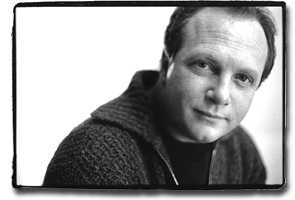
Charlie Peacock Interview In his own immutable style, Charlie Peacock has been one of the founding fathers and reigning member of the CCM elite. His impact on the musical genre has been immeasurable, garnering multiple awards, top ten hits, production credits, and a host of other accolades. No other artist has influenced Christian music's underpinnings like Charlie Peacock. In this interview, he speaks candidly about the the current state of Christian music, about what it takes to be a Christain artist, and also about his own beginnings in music (including some interesting stories about writing songs). Beginnings ChristRock. When did you write your first song, and how did it happen? I wrote my first song, an instrumental piece for cornet, while riding in the back of a car between Chico and Yuba City, CA. This was fifth or sixth grade. I was inspired by having just attended a music festival where I competed in a solo competition for trumpet and cornet. ChristRock: Was there one person who encouraged you to write music? No. My parents were my first encouragers. I was especially inspired when I found a piece of music that my father had written. Wanting to be like him I decided I should write as well. My mother was good at rhymes and limericks. She inspired me in the lyric realm. In addition to the encouragement that my wife gave me when we were young sweethearts in highschool, I was encouraged first by a musician named Gene Dennis and then later in 1978 by a songwriter named Steve Holsapple. ChristRock: Which artists or musical styles influenced you initially? My influences involve four simple streams: 1) James Taylor (the singer-songwriter component) 2) Miles Davis (the jazz component) 3. R&B Radio 1970-1974 (the old school R&B element ala Temptations, Gladys Knight, Al Green, Smokey Robinson) 4) Top-40 singles (Smash Hits all genres). ChristRock: Your first album, "Lie Down in the Grass," had a more obvious jazz feel. Do you consider yourself primarily a jazz artist, or a pop artist? Based on my work output I would have to call myself a pop artist. Based on my piano improvisations that have yet to be recorded, I would qualify for some sort of quirky jazz description. ChristRock: Who has influenced you most from both genres? Jazz: Miles Davis, Keith Jarrett, John Coltrane, Bill Evans, Carla Bley Pop: James Taylor, Paul Simon, Peter Gabriel, Sting, Joni Mitchell ChristRock: One of your first projects as producer was working with The Choir. "Diamonds in the Rain" is one of my own all-time favorite albums. What was it like working with Steve Hindalong and Derri Daugherty in those early days? Was this a growing period for you as a producer? By working with me Steve and Derri learned that they needed a stronger vision for their own music. They learned that if they didn't show up with a strong vision and the stamina to carry it out, this work would fall to the producer. Consequently, their next album was, I think, stronger artistically. They were more in command of their art. Diamonds and Rain is much more a collaboration between two gifted artists and a producer. I grew through the process as well, primarily learning that I did not like being such a discernable contributor. I would later learn to temper my contributions. ChristRock: Allmusic describes your early projects as "avant-garde, low budget solo records." Do you agree with those assessments? My first recording, the single No Magazines b/w What They Like was avant-garde by anyone's standards. Lie Down In the Grass was only avant-garde by the standards of CCM at the time. The low budget remark is definitely true. ChristRock: One turning point in your career was co-writing the pop hit "Every Heartbeat" with Amy Grant and Wayne Kirkpatrick. You received a lot of attention for that song. What part did you play in writing it? How did you become involved with the song? I wrote the title and the music. Amy and Wayne fleshed out the lyric. I made a demo of the song and played it for Brown Bannister. He played it for Amy and her manager. The rest is history. Except that Amy kept losing the demo and I'd have to make her another copy and take it over to her house. Finally, after losing the third one, I went to her house, danced around the den to the sound of the boombox playing my little demo, singing a nonsense lyric to the melody I'd written. That day it was decided the song would be cut. She and Wayne stayed up late writing the lyric while I worked on the program arrangement. The next morning we starting recording. ChristRock: Another stand-out song is "In the Light," which is one of my all-time favorites. Can you talk about your songwriting process? Lyrics first, then music? For In The Light I started out with a groove inspired by Johnny Clegg and Savuka, a south-African zulu pop group. If I remember correctly, I wrote the chorus first. I wanted it to be very singable and simple. I saved the verses for the lyric & melodic complexity. Because of this choice, the chorus is really inspired to launch in a big way. ChristRock: Where do you get most of your ideas from, and how have you recovered from dry spells in your writing? My ideas come from the world of ideas which is real estate too vast for anyone human. Becuase of this, there are always ideas to tap into and to write about. Still, if I do percieve myself to be going through a bit of a dry spell I never force it. Instead I do something else. If I'm under a deadline, I do have several tricks up my sleeve to get the job done. I can't tell what I do though. If I did they wouldn't be tricks anymore now would they? Controversies ChristRock: Your song "Kiss me Like a Woman" stirred up the CCM community. What do you think of the controversy surrounding that song and what some consider to be your best album, "Love Life," which dealt with other sexual issues? I respect the controversy because it mostly has to do with people's weaknesses and pain. Still I do think Christians ought to bring a Christian way of thinking to bear upon a multitude of subjects, including human sexuality. ChristRock: The CCM market has been critical of other artists who push boundaries. Bill Mallonee from the Vigilantes of Love was criticized for his song "Lady Luck" which talked about sexual desires. Julie Miller has been blasted for dealing with the same issues. What do you think of these criticisms? The criticisms are indictative of the health of the body of Christ, at least the body that comes in contact with this music. It reveals how deeply we compartmentalize our understanding of faith and the gospel. It shows that in practice, we really do live a spirtual life and then an everyday life, and that we do our best to keep the two from meeting. Part Two coming soon...
|
|||


All Information on all pages Copyright 1997-9 by John Brandon except where noted.